This week I posted five slides on Instagram. They are quiet, mostly text, and they come from something I see in my practice almost every day. Someone arrives with one thing. Sleep, often. Or a meeting they cannot stop rehearsing. Or an argument that keeps coming back. And once we start talking, that one thing turns out to sit inside a wider picture.
The one thing is real. It is just rarely alone.
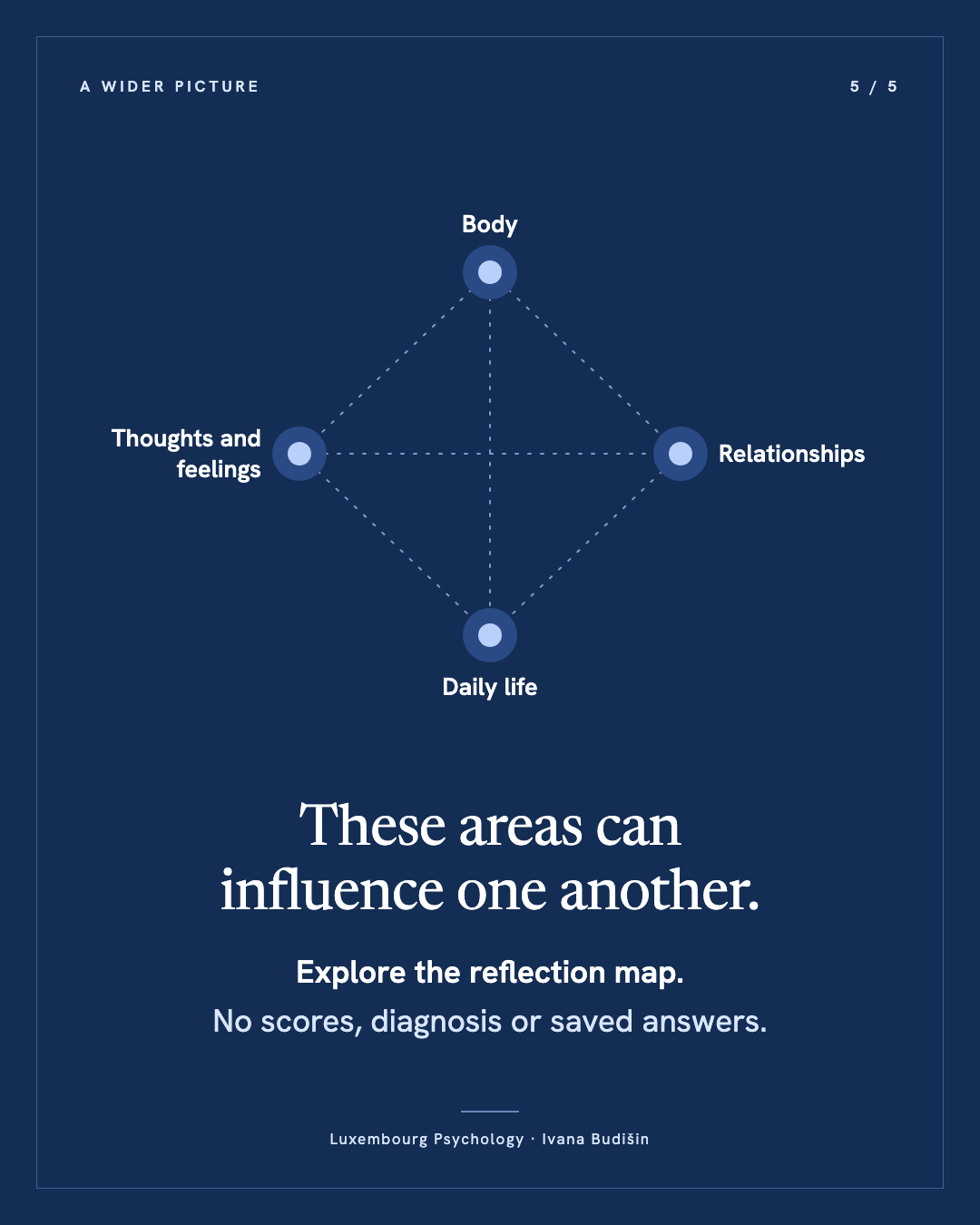
Four areas, joined up
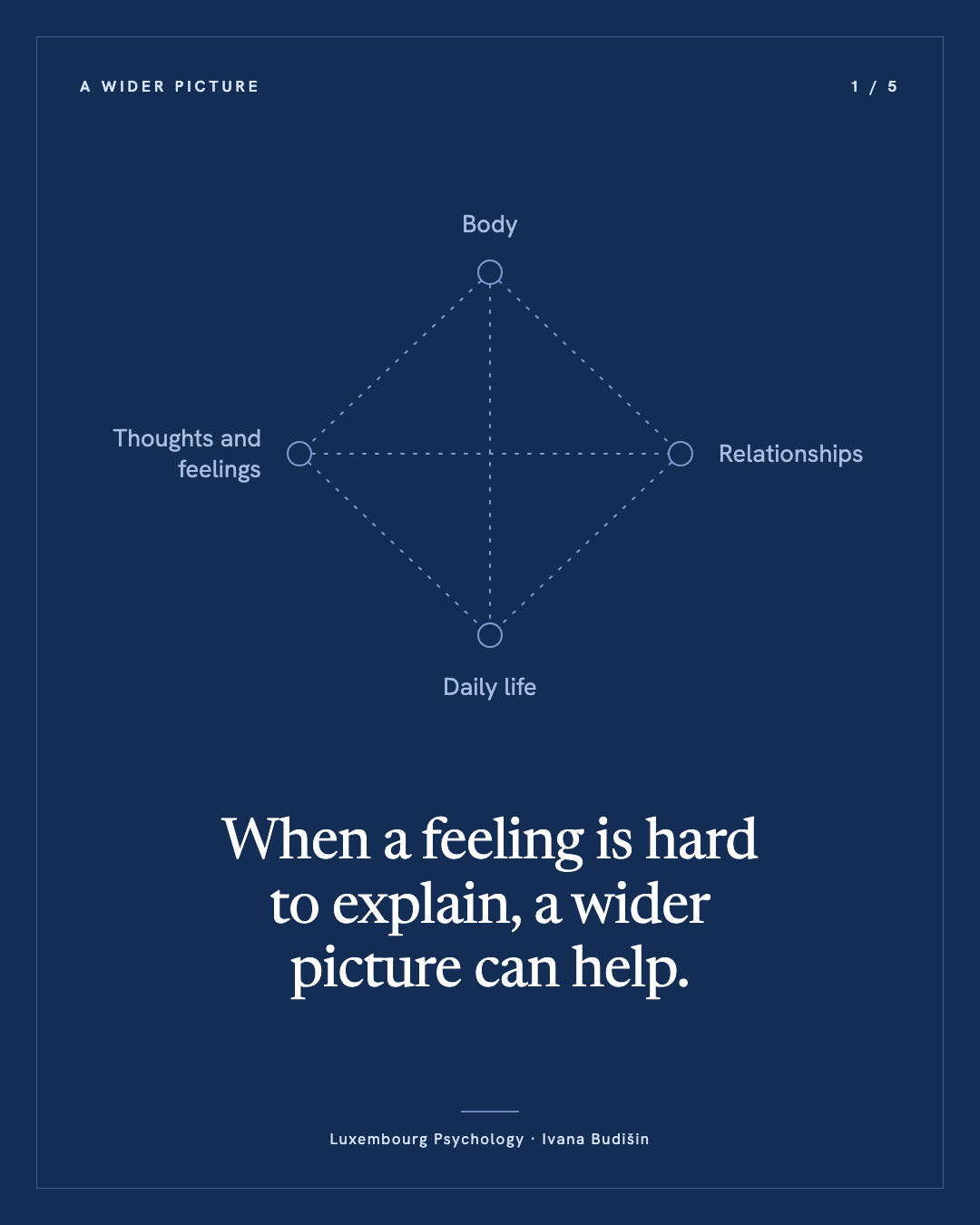
The first slide says: when a feeling is hard to explain, a wider picture can help. Then comes the map, with four areas.
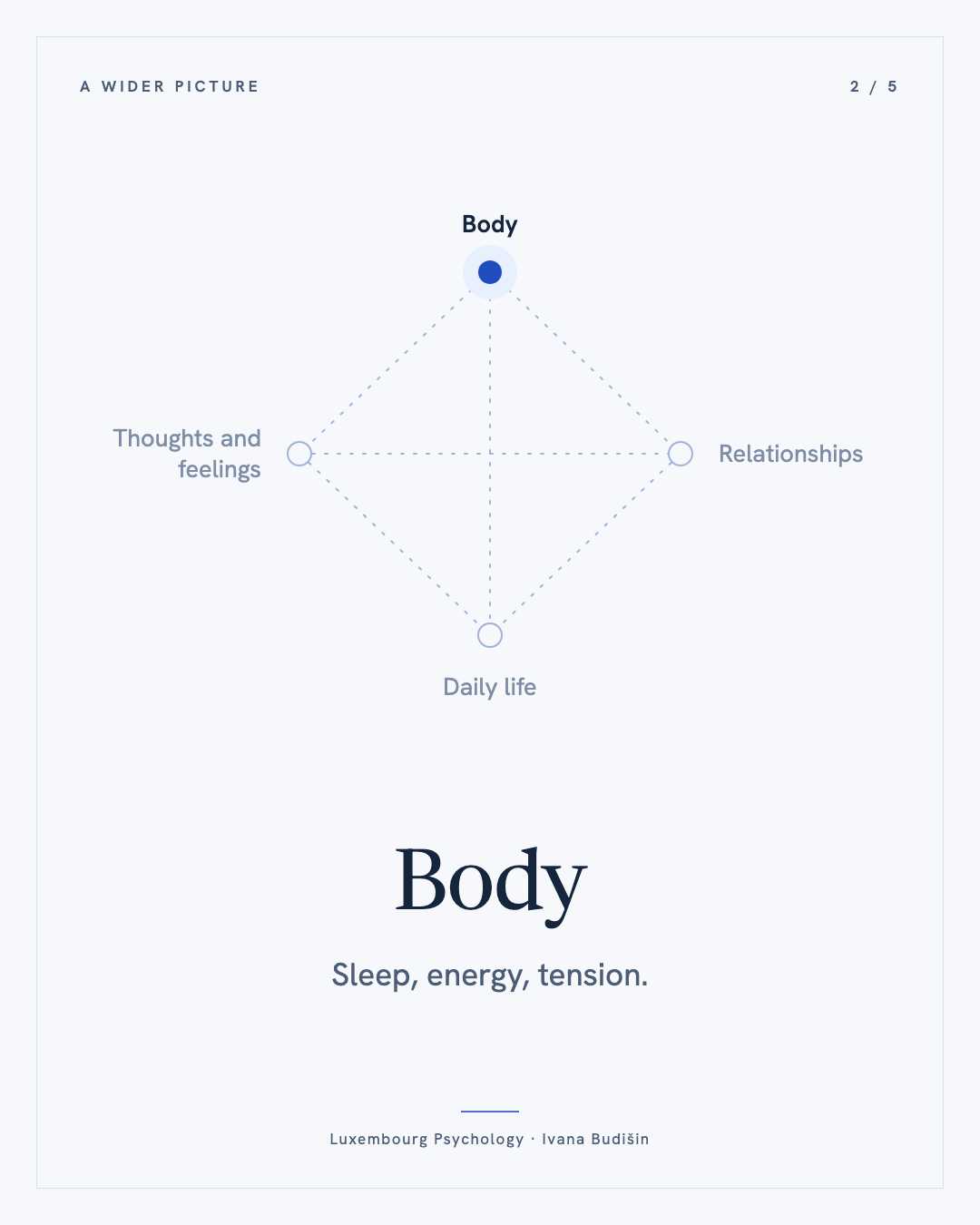
Body. Sleep, energy, tension. How the night went, how much is left in the tank by four in the afternoon, where the shoulders are sitting.
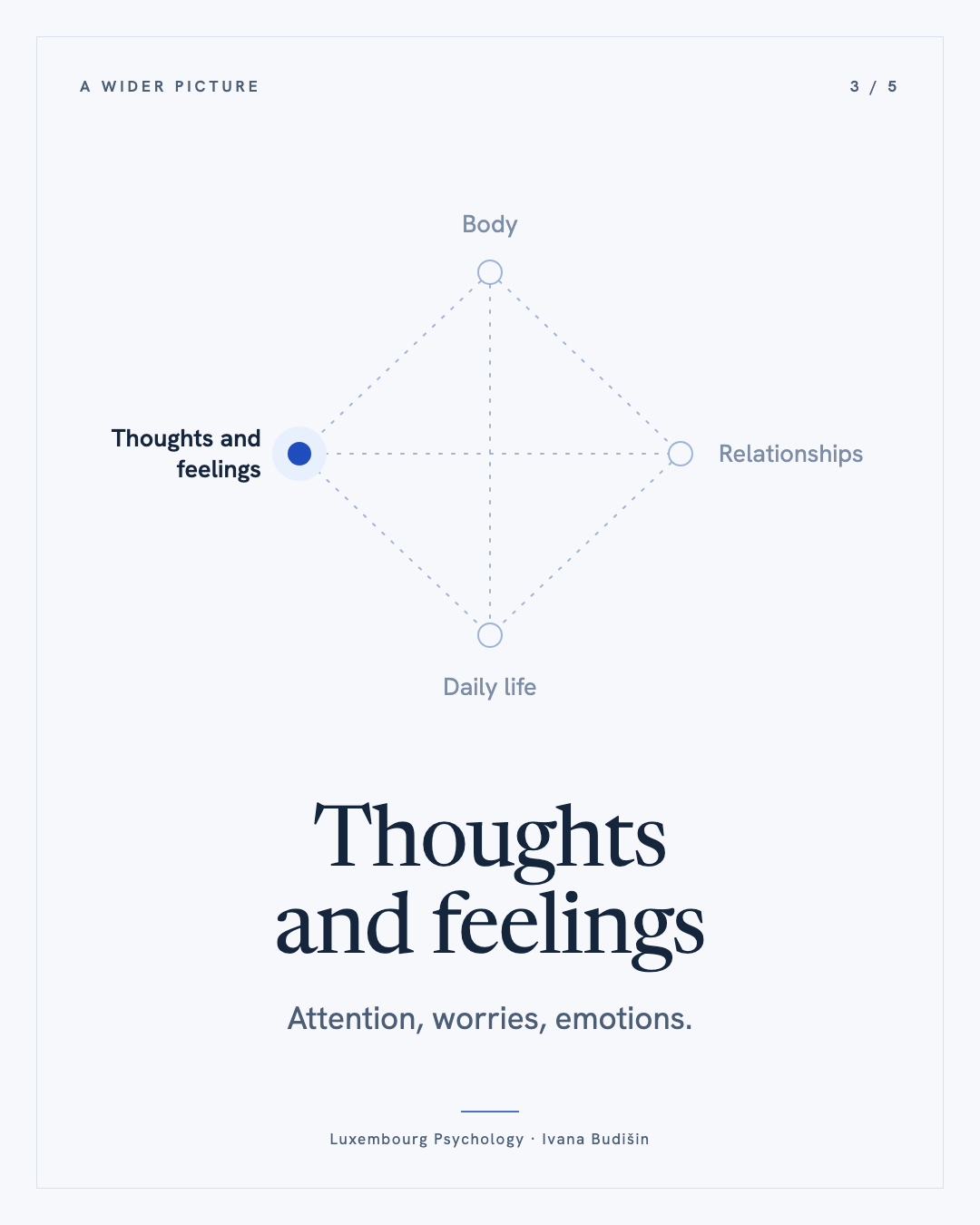
Thoughts and feelings. Attention, worries, emotions. What the mind does with its spare time, if it gets any.
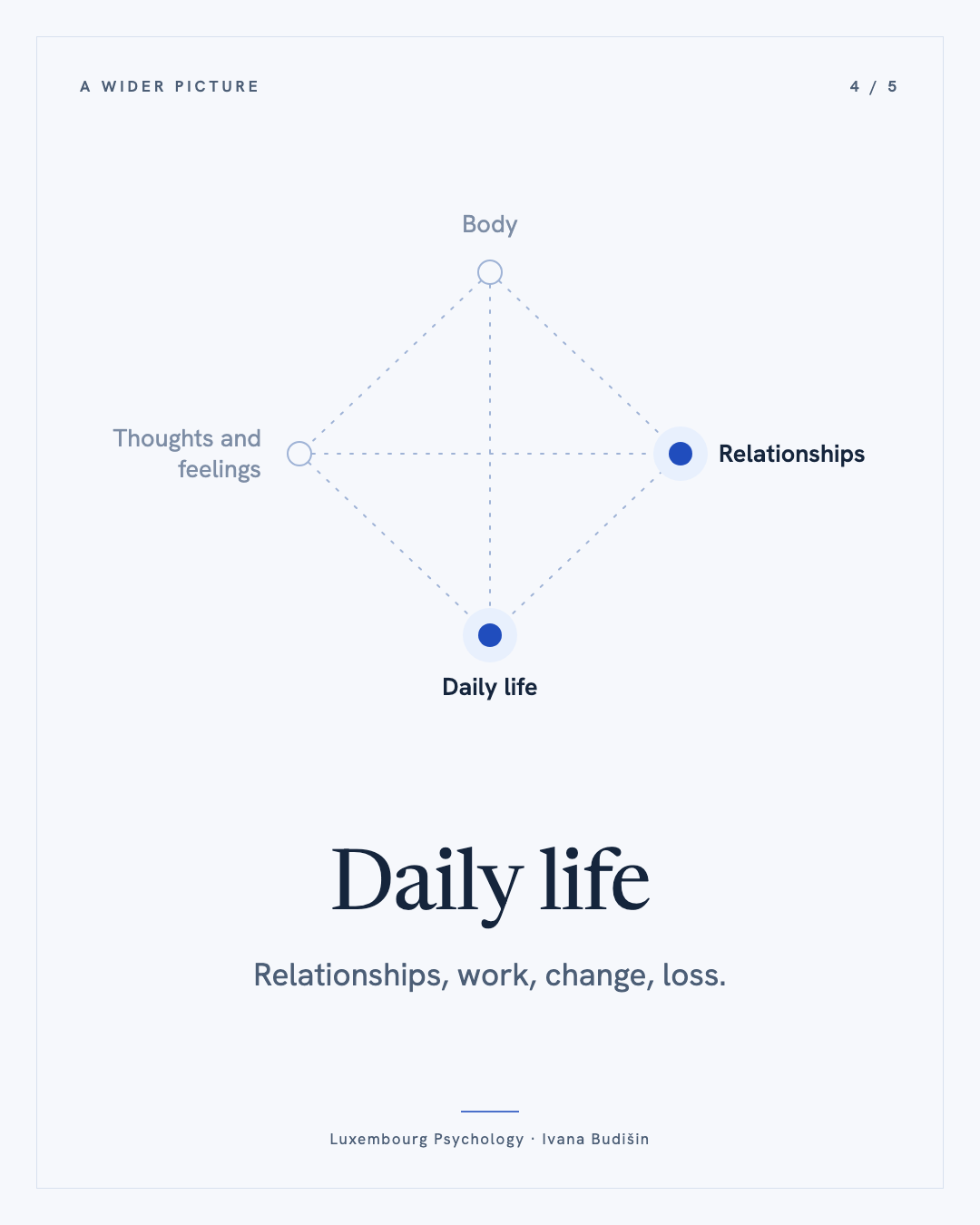
Daily life. Relationships, work, change, loss. The people around you, what is being asked of you, what has recently changed or gone.
On the slides these are points joined by dotted lines, and the dotted lines are the point. A poor night does not stay in the body. By the afternoon it is in how you read an email. The same meeting feels different after eight hours of sleep than after five. A loss can show up months later as tiredness, and the tiredness gets blamed on work. These areas influence one another, in both directions, all the time.
That is more or less what the biopsychosocial model says, and it is how I work. Instead of asking which box a difficulty belongs in, I ask what else is in the picture.
Why a map and not a test
There is no shortage of online questionnaires that give you a score. I did not want to add another one. A score tends to close the conversation: here is your number, here is your label. A map does the opposite. It opens things up.
So on this website there is a reflection map. You choose a starting point, something close to what is on your mind, and then you look at the four areas and pick the words that fit. Only the words that fit. You can skip any part of it. At the end you see your own words together on one page, and that is all. There is no score, no diagnosis, and nothing is saved. The choices stay in your browser and disappear when you close the page.
Some people bring those words to the first call. Others do the map and never contact me, and that is a fine use of it too.
If you would like to try it, the map is here. And if you would rather begin with a conversation, the first call is free and takes 20 minutes.